Mastery you can see
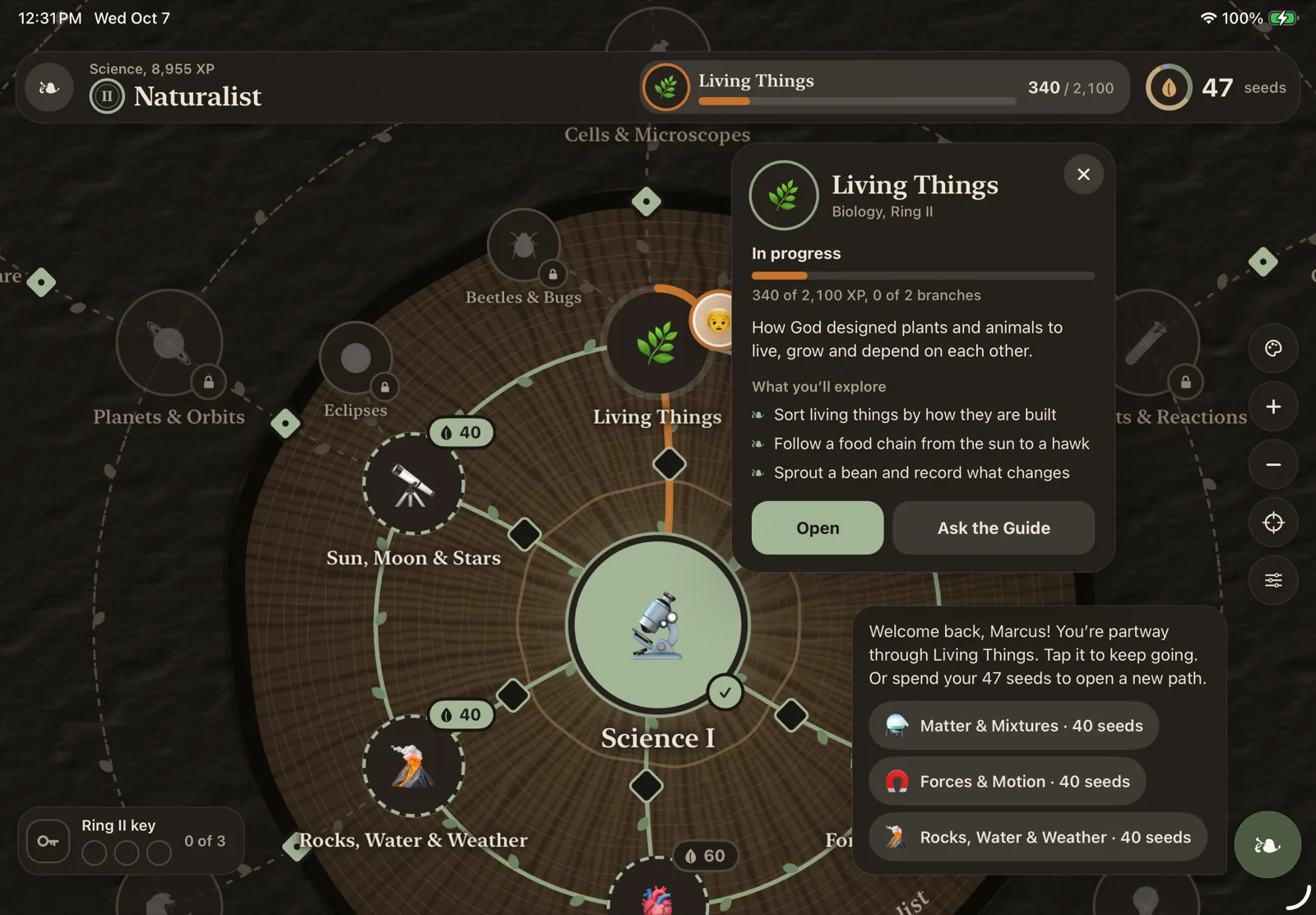
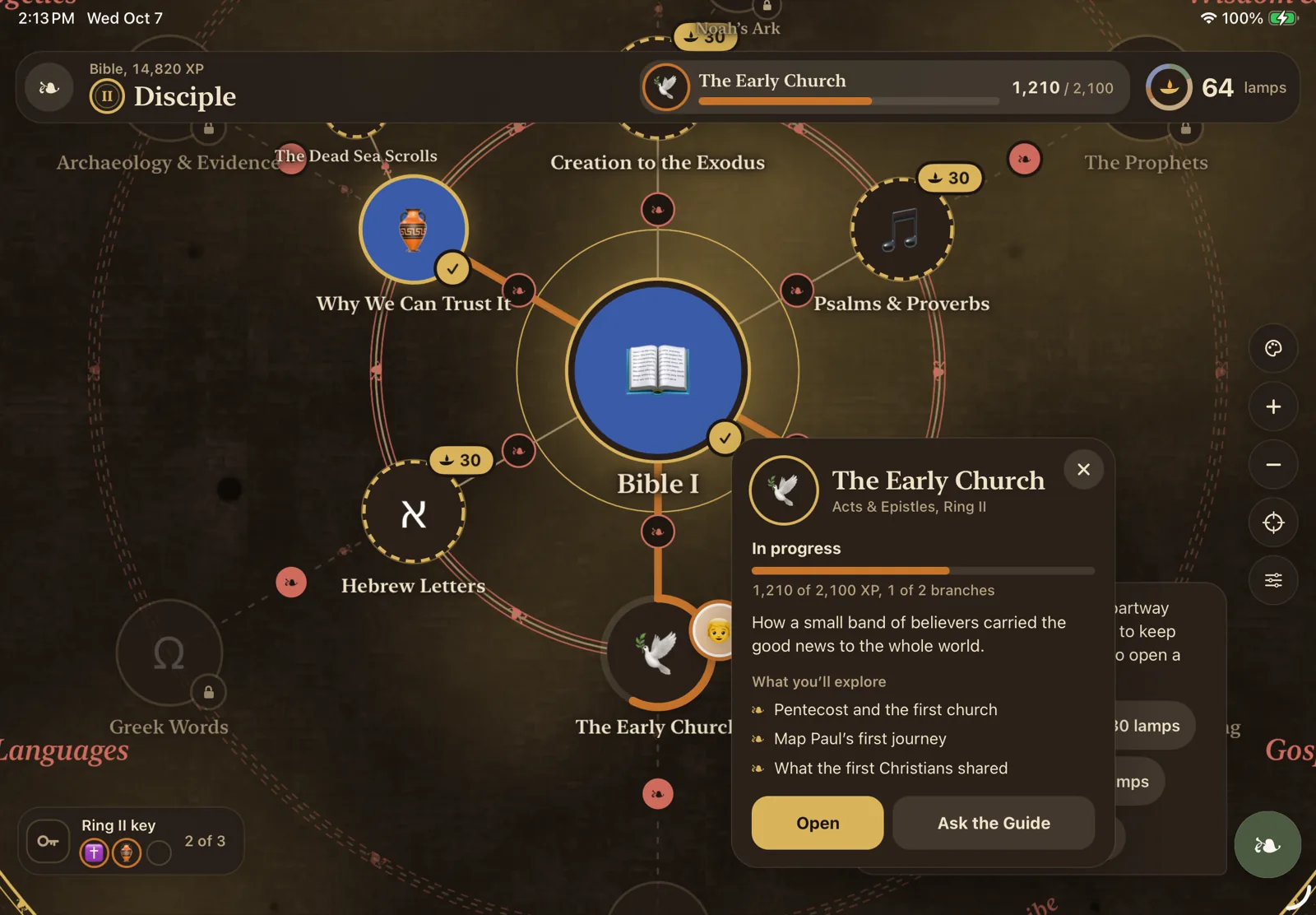
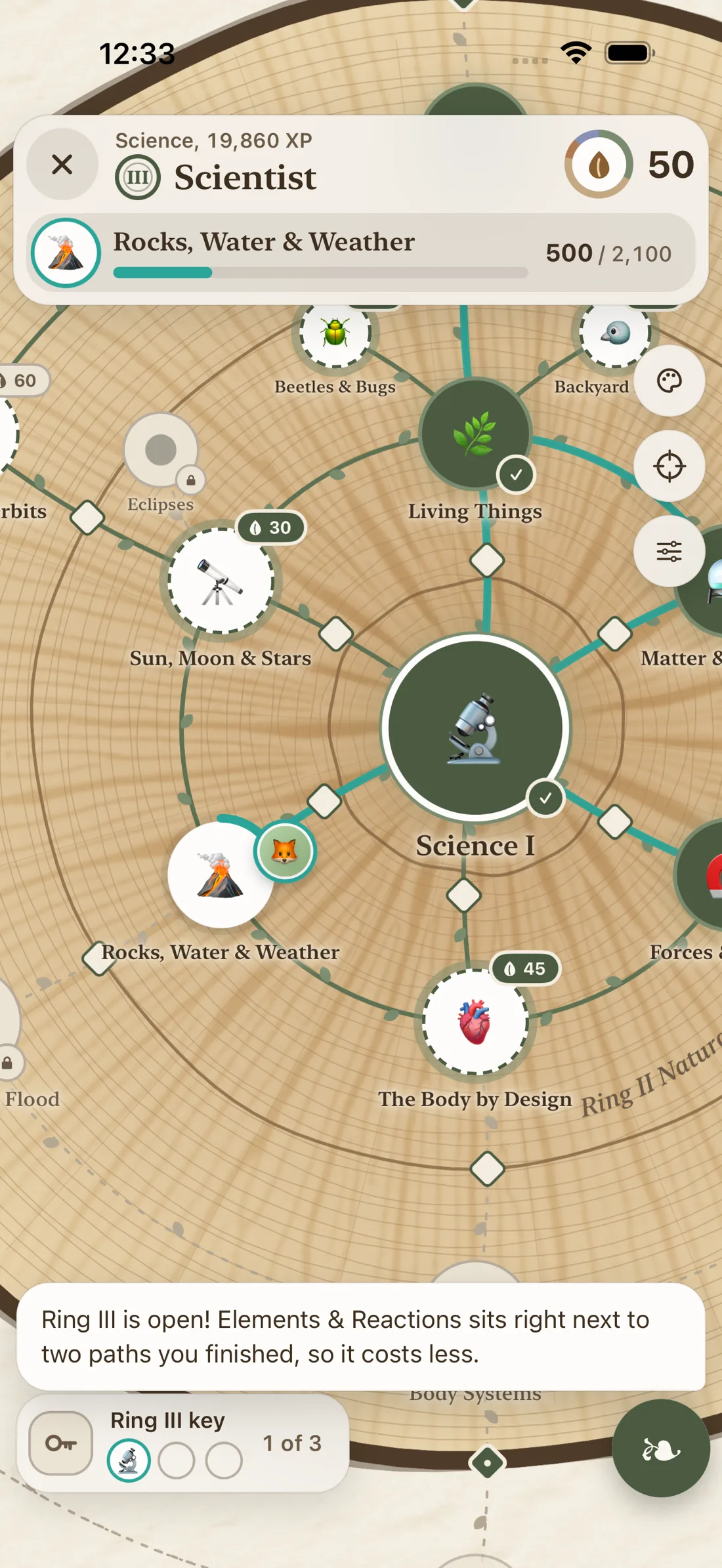
Every subject is a map, not a grade. Paths fill in as a child shows understanding in conversation, the map grows outward ring by ring, and both of you can see exactly what has been earned and where they can go next.
Because learning isn't one thing.
A child who notices carefully and a child who argues well are both learning, in different directions. Four separate kinds of XP keep one from hiding the other.
Observation
Earned by looking closely and describing what is actually there.
Inquiry
Earned by asking the next question, especially the awkward one.
Creation
Earned by making something: a drawing, a model, a game of their own.
Reflection
Earned by saying what changed in their thinking, and why.
XP is earned through understanding, never through minutes on the app.
Many paths, one map.
The map starts at the center and grows outward. Ring I is the subject's foundations. Beyond it, each path follows a classic discipline, like biology, astronomy, the Gospels or Hebrew letters, and the child picks where to go. A child who loves living things can go deep while a sibling heads for astronomy or apologetics, and neither is behind. Checkpoints along each path make sure the learning is real, and the next ring opens once a child has finished paths in a few directions and passed that ring's test.
Seven subjects, one record
Every subject uses the same map, the same four XP types and the same mastery rules, so a child's record stays one continuous thing from the first look at a leaf to a defended argument. Each map has a style: growth rings for science and wellness, an illuminated manuscript for Bible and language arts, a Liberty quilt for American history and a survey map for geography; math keeps a simple style. A child can switch any subject to another style, like the star atlas.
Hidden in the heart, then tested.
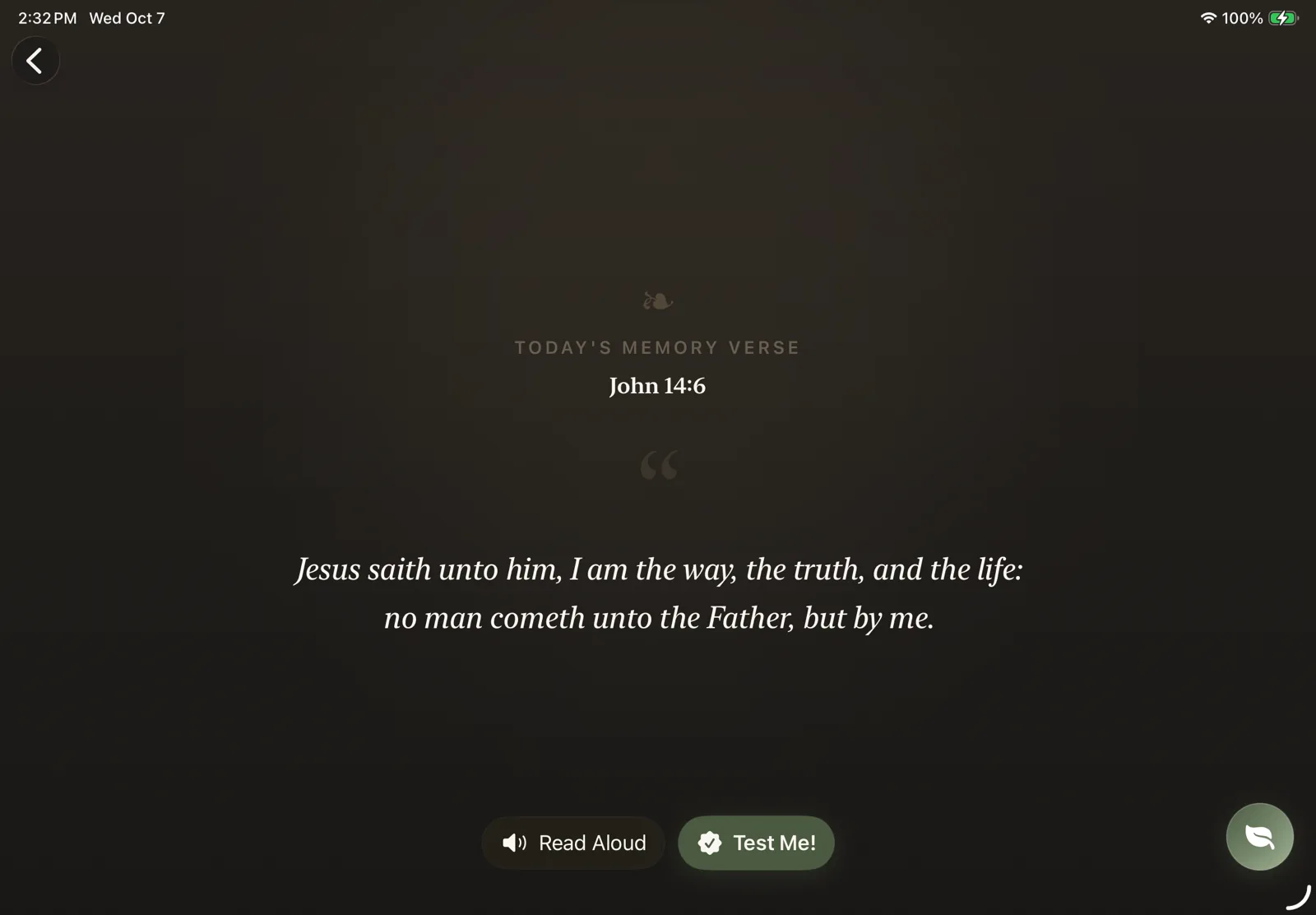
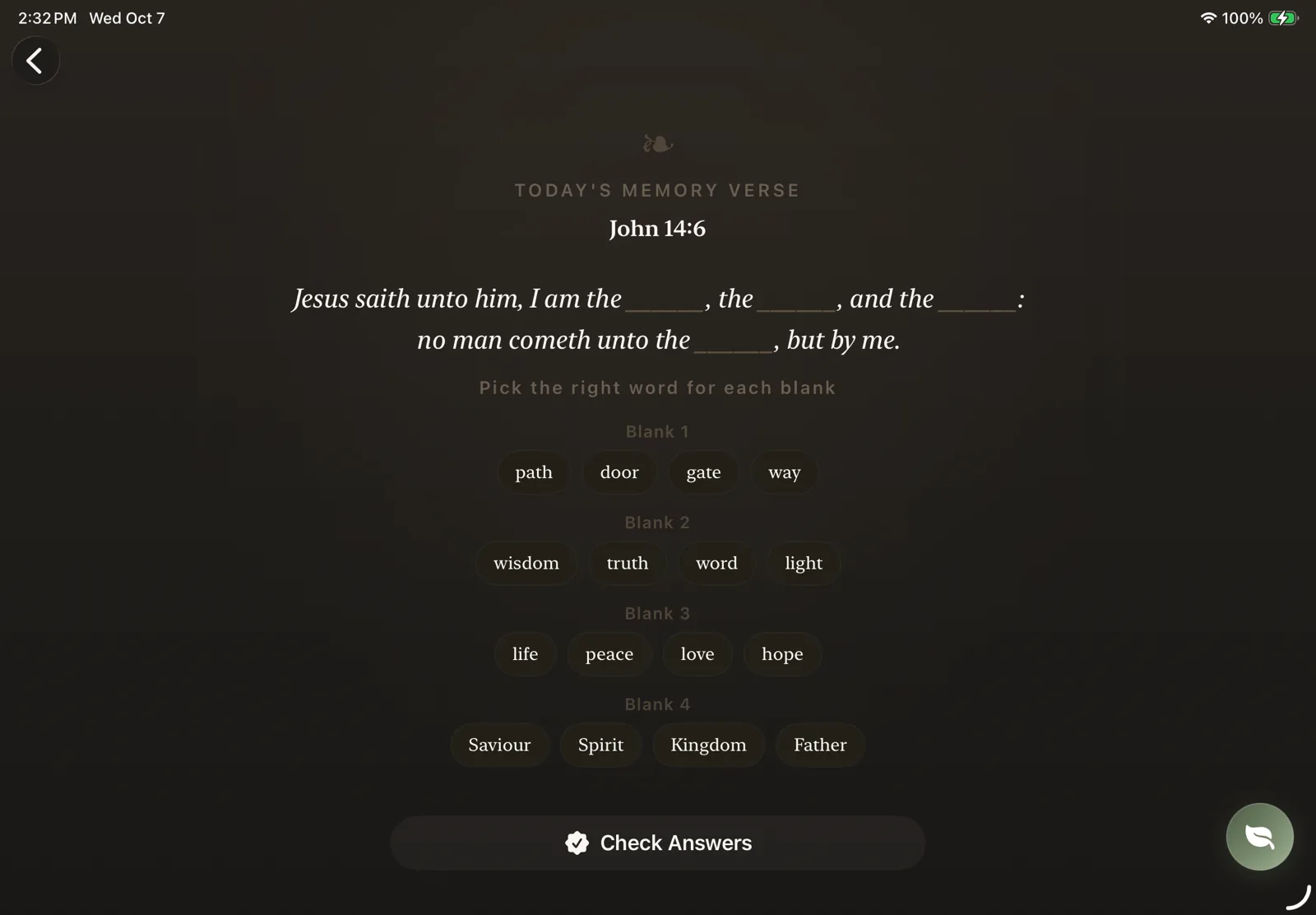
Every day the Bible subject carries a verse to memorize. The child hears it read aloud as often as they like, then takes it as a test: blanks in the verse, real words to choose from, and the most XP for getting it right from memory on the first try.
Real practice, not time on app.
A child who idles gains nothing. XP comes from a demonstrated answer, a completed activity, a created thing, or a reflection at the end of a session. The map is the honest picture of what they can do.
Ages on the map are a suggestion, like the recommended level of an area in a game. A path meant for older children says it may be a big stretch, and the child can still go. Nothing is locked by age.
The Guide can open the map to a path and suggest where to go next. Sprouts are small side paths that grow from what a child keeps asking about, in science, Bible and American history for now. Once a child is past Ring I, parents can open that subject's map, read-only, in the dashboard. The weekly digest and the homeschool portfolio record the paths a child finishes.
See a child's profile →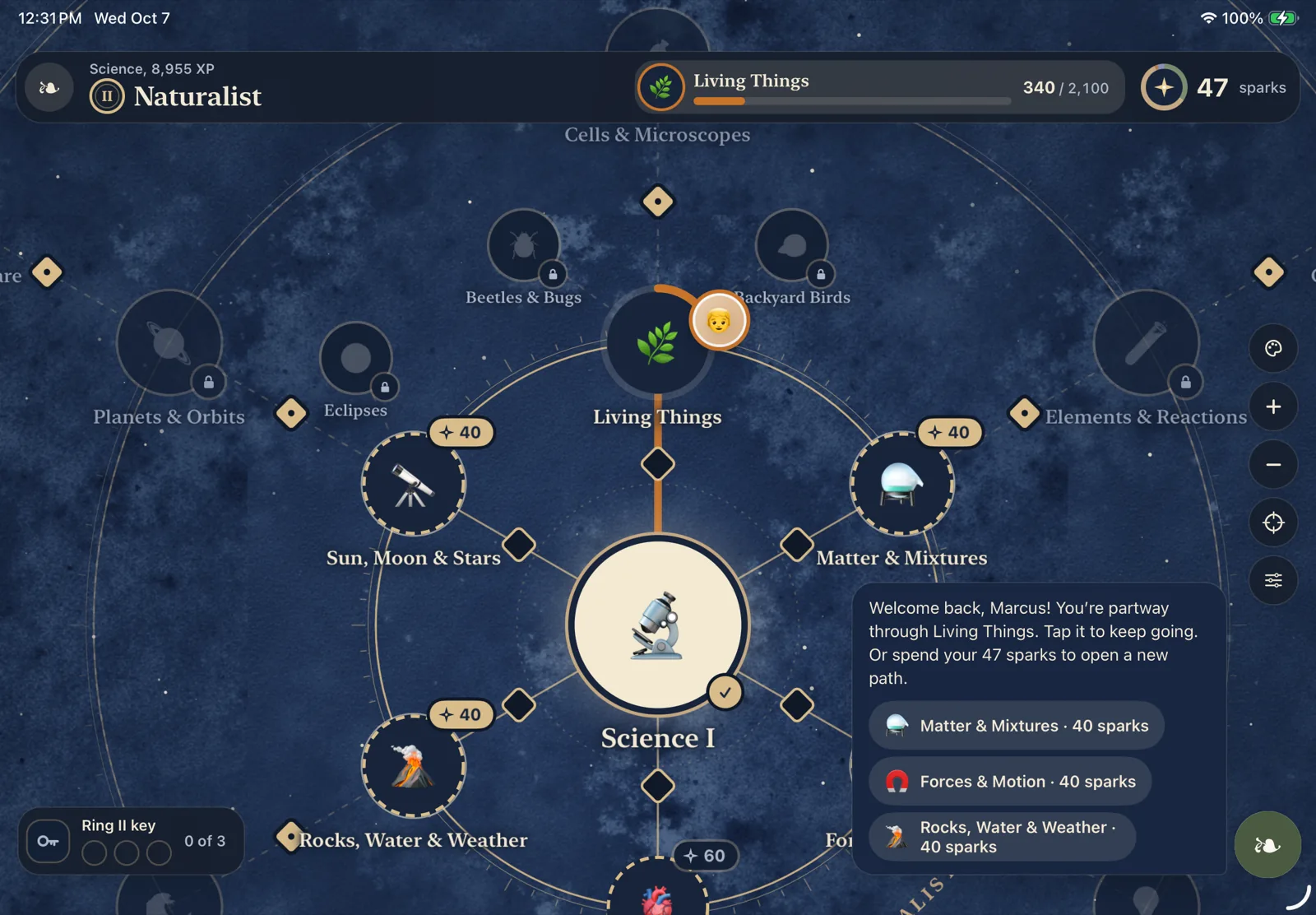
Plant a seedling with your family
One conversation is enough to start the map.